Table of Contents
The Specialist 6G Welder Supplier in Qatar — MPS Qatar Trading & Contracting
In the world of welding, the 6G qualification stands apart. It is the most rigorous, most demanding, and most respected welding certification in the industry. A welder who holds a valid 6G qualification has demonstrated the ability to produce code-quality welds on a fixed inclined pipe in all positions — the most challenging test of welding skill that exists. In Qatar’s oil and gas sector, where the quality of every pipe weld can mean the difference between safe operation and catastrophic failure, 6G-qualified welders are the most valued and the most sought-after tradespeople on any project site.
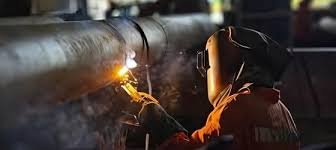
MPS Qatar Trading & Contracting is a specialist 6G welder supplier in Qatar. We maintain a dedicated pool of 6G-certified pipe welders and supply them to oil and gas operators, EPC contractors, and industrial facilities across Qatar. Our 6G welders are tested, certified, and experienced. They produce the weld quality that Qatar’s most demanding projects require.
What Is the 6G Welding Position?
To understand why 6G welders are so highly valued, it is important to understand what the 6G position actually means.
Welding positions are classified using a combination of numbers and letters. The number refers to the position of the weld — 1 is flat, 2 is horizontal, 3 is vertical, 4 is overhead. The letter refers to the type of joint — G for groove (butt) weld, F for fillet weld.
The 6G position is unique. In 6G welding, the pipe axis is fixed at a 45-degree incline and cannot be rotated. The welder must move around the pipe and weld in all positions — flat, vertical, horizontal, and overhead — in a single test. Qualifying in 6G demonstrates competence across all other welding positions simultaneously.
This is why a 6G welding qualification is often described as the most comprehensive pipe welding certification available. A welder who passes the 6G test is considered capable of welding in any position and any configuration.
Why 6G Welders Are Critical in Qatar’s Oil and Gas Sector
Qatar’s oil and gas infrastructure is built on thousands of kilometers of pipe systems operating under extreme pressures and carrying flammable, toxic, and commercially valuable hydrocarbon products. The integrity of every weld joint in these systems is a matter of safety, environmental protection, and operational reliability.
Major operators and EPC contractors in Qatar typically require that welders working on pressure-containing pipe joints hold current qualifications tested to ASME Section IX or an equivalent recognized standard. For the most critical pipe welds — particularly on high-pressure process piping and pipelines — 6G qualifications are either specified by the engineering standard or preferred by the project quality management team.
Beyond the technical requirement, 6G-qualified welders bring a level of skill, experience, and professional pride that typically translates into higher productivity, lower rejection rates, and fewer rework incidents on site. When your project cannot afford failed weld inspections or production delays, 6G welders are the safest choice.
MPS Qatar’s 6G Welder Pool: What Sets Us Apart
Genuine 6G Qualifications, Verified and Current
The first thing many clients discover when they try to source 6G welders in Qatar is that claimed 6G qualifications are not always what they appear to be. Some workers present qualifications that are expired, were tested to a lower standard than claimed, or in some cases are simply fraudulent.
MPS Qatar takes certification integrity with absolute seriousness. Every 6G welder in our pool has been through the following verification process:
- Review of the original welder qualification test record (WQTR) from the testing authority
- Confirmation that the test was performed to ASME Section IX, AWS, or another recognised standard
- Verification that the qualification record is current and has not lapsed
- Confirmation that the qualified range covers the material, wall thickness, and pipe diameter required for the client project
- Practical weld test conducted by MPS Qatar’s own technical assessors to independently confirm skill level
This multi-layer verification means our clients can present MPS Qatar-supplied 6G welders to their project quality and inspection teams with confidence.
Experience on Qatar’s Landmark Projects
MPS Qatar’s 6G welders have worked on some of Qatar’s most significant oil and gas projects. Their experience spans onshore pipeline construction, refinery piping installation, LNG facility expansion, offshore platform hook-up, and shutdown and turnaround welding scopes. This project experience means our welders understand the working environment, the quality expectations, and the safety culture of Qatar’s major project sites.
Rapid Mobilisation for Shutdown Requirements
Shutdown projects in Qatar often require 6G welders at very short notice. When a plant shuts down for maintenance, the welding scope that emerges may be larger than anticipated, or the timeline for completing tie-in welds may compress. MPS Qatar’s resident 6G welder pool enables us to respond to urgent requirements faster than suppliers who rely on international recruitment.
Materials and Base Metals Our 6G Welders Work With
MPS Qatar’s 6G welders are experienced and qualified on a range of base metals commonly encountered in Qatar’s oil and gas and industrial projects:
Carbon Steel (CS): The most common material in oil and gas piping systems. Our welders are qualified on various grades of carbon steel in multiple thickness ranges.
Stainless Steel (SS): Used in applications where corrosion resistance is required. TIG (GTAW) root pass welding on stainless steel is a core competency for our senior 6G welders.
Chrome-Moly Steel (P91, P22, P11): Used in high-temperature service applications including power generation and refinery process piping. Welding chrome-moly steels requires careful preheat management and post-weld heat treatment (PWHT), and our welders understand these requirements.
Duplex and Super Duplex Stainless Steel: Used in highly corrosive service environments. Welding these materials requires precise heat input control and specific filler metals.
Low Temperature Carbon Steel (LTCS): Used in cryogenic and low-temperature service applications including LNG facilities.
Welding Processes Used by MPS Qatar 6G Welders
Most 6G pipe welding in Qatar’s oil and gas sector uses a combination process:
GTAW Root Pass: The root pass — the first weld bead that joins the pipe ends — is typically made using TIG (GTAW) welding for maximum quality and penetration control. This is the most critical pass in the weld joint.
SMAW Fill and Cap Passes: Subsequent fill and cap passes are typically made using SMAW (stick) welding for productivity. Some projects specify GTAW throughout for the highest quality requirements.
GTAW + GMAW Combination: Some projects use a TIG root followed by MIG fill and cap for higher productivity while maintaining root quality.
Our 6G welders are qualified in the combination processes relevant to their specific qualification records. When you specify a welding process requirement, we match the right welder to that scope.
Inspection and Quality Requirements Our 6G Welders Understand
Weld quality in Qatar’s oil and gas sector is verified through rigorous non-destructive examination. Our 6G welders understand and work comfortably within quality assurance systems that include:
Radiographic Testing (RT): X-ray examination of completed weld joints to detect internal defects. Our welders understand RT hold points and the consequences of producing welds that fail radiography.
Ultrasonic Testing (UT) and TOFD: Advanced UT methods used on thicker sections and critical piping.
Magnetic Particle Testing (MT) and Liquid Penetrant Testing (PT): Surface examination methods used on completed welds and heat-affected zones.
Visual Inspection (VT): The first line of quality assurance for all weld joints. Our welders understand visual acceptance criteria and self-inspect before calling for formal inspection.
Welders who understand the inspection process produce better welds because they know what is being looked for and they take quality personally.
Frequently Asked Questions — 6G Welder Supplier in Qatar
Q: What does a 6G welding qualification mean and why is it important in Qatar? The 6G qualification means a welder has demonstrated the ability to weld on a fixed inclined pipe in all positions simultaneously. It is the most comprehensive pipe welding test available and is widely required or preferred for pressure-containing pipe joints in Qatar’s oil and gas sector. A 6G qualification is often considered the gold standard of pipe welder certification.
Q: What standard are MPS Qatar’s 6G welders qualified to? Most of our 6G welders are qualified to ASME Section IX, which is the standard most widely specified by oil and gas operators and EPC contractors in Qatar. Some welders also hold qualifications to AWS standards or project-specific procedures. We can advise on the specific qualifications held by available workers when you enquire.
Q: How does MPS Qatar verify that a 6G welding qualification is genuine? We review the original welder qualification test record from the testing authority, confirm the test was performed to a recognised standard with proper witnessing and documentation, verify the qualification is current, confirm the qualified range matches the client’s scope, and conduct our own independent practical weld test on each welder before they join our pool.
Q: Can 6G welders from MPS Qatar work on both carbon steel and stainless steel systems? This depends on the individual welder’s qualification record. A 6G qualification on carbon steel does not automatically qualify a welder to work on stainless steel. We will advise on each welder’s specific qualified materials and processes when matching workers to your project requirements.
Q: How quickly can MPS Qatar deploy 6G welders for a shutdown project in Qatar? For 6G welders already in our resident pool in Qatar with valid documentation, we can typically mobilise within 24 to 72 hours. For very urgent requirements, we work as quickly as site access processing allows. Early engagement — even a few days before you need the workers on site — significantly improves mobilisation speed.
Q: Are 6G welders from MPS Qatar qualified on all pipe sizes? 6G welding qualifications are granted over a qualified range that depends on the diameter and wall thickness of the test piece. A qualification on a standard test pipe typically covers a defined range above and below the test diameter. We will confirm the qualified diameter and thickness range for each welder when matching them to your specific project pipe specifications.
Q: Why is the 6G qualification more valued than other welding qualifications? Because it covers all welding positions simultaneously in the most difficult configuration. A welder who qualifies in 6G is considered to be competent in all positions, making them the most versatile and capable pipe welders available. In quality-critical, high-pressure pipe welding work, they are simply the best option.
📞 Speak with a Welding Manpower Specialist in Qatar
📩 Request Certified Welder Profiles Within Hours